Some links in this article are affiliate links. If you buy through them, I may earn a small commission at no extra cost to you.
I watch for a simple pattern in winter: a bonsai that is resting still looks composed, while a bonsai that is struggling starts to look uneven, dull, or dry in ways that do not fit its species or its season. The important signs are not only leaf drop or browning, but changes in buds, twigs, root moisture, and the speed of decline.
After many winters with bonsai, I have learned that cold alone is rarely the whole story. Most winter problems come from a combination of stressors: frozen roots, drying wind, repeated thawing and refreezing, stale indoor air, weak light, or well-meant overwatering after growth has already slowed.
What signs should I look for to indicate my bonsai is struggling with the winter conditions?
If you want the short answer first, look for these signs:
- Foliage that turns crisp, gray-green, bronze, or brown outside the species? normal winter color change
- Buds that shrivel, blacken, or fail to stay firm through dormancy
- Twigs that become brittle and dry at the tips instead of remaining flexible
- Soil that stays bone dry in wind, or stays cold and wet for too long without being used
- Sudden leaf drop on tropical indoor bonsai after exposure to heater drafts, low light, or cold glass
- Bark wrinkling, weak cambium color, or branch dieback that moves inward from the tips
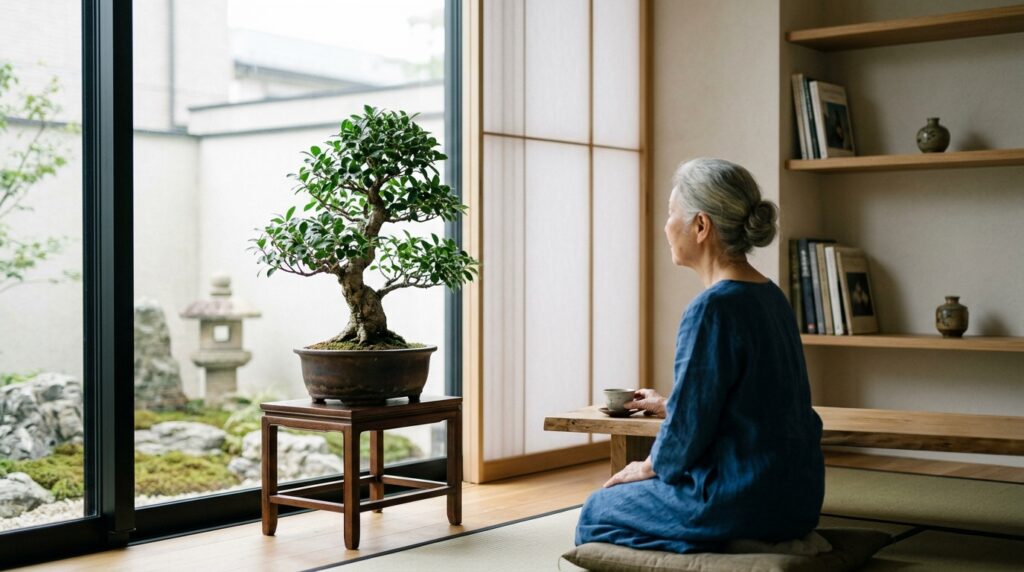
A healthy bonsai in winter often looks quiet, even severe. A struggling bonsai looks depleted. That distinction matters. Dormancy is stillness with stored strength. Winter stress is stillness with deterioration.
Normal winter dormancy and real distress are not the same thing
Many beginners panic when a deciduous tree drops leaves, slows down, and appears bare. That alone is not a warning sign. On maples, hornbeams, elms, and many other temperate species, leaf loss is expected when the tree is kept outdoors properly. The buds should still look set and clean, the twigs should stay supple, and the silhouette should remain orderly rather than collapsing into random dieback.
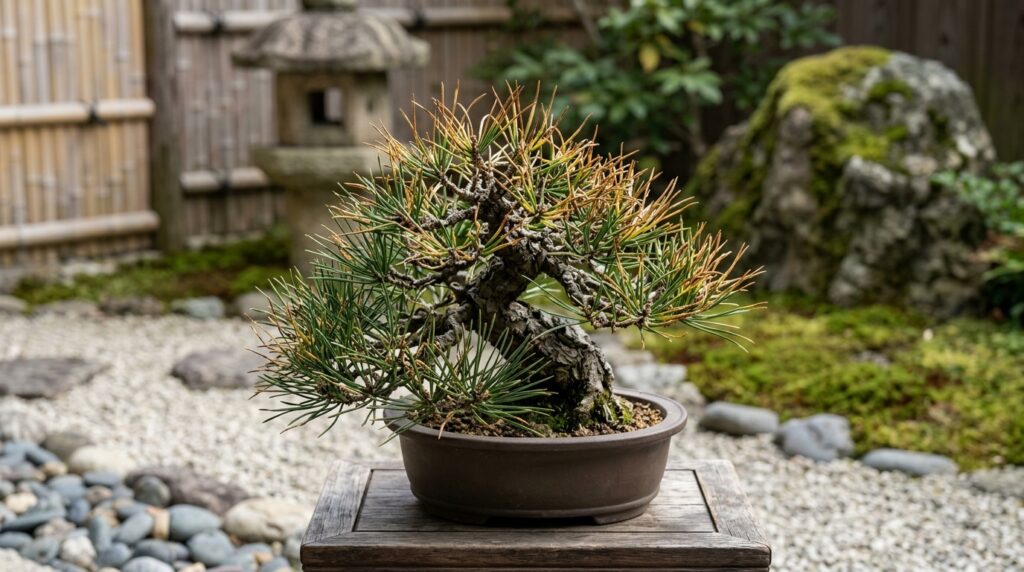
Conifers require a different eye. A juniper or pine can darken in winter and even take on bronze or purplish tones as part of seasonal protection. That is not automatically damage. What concerns me is patchiness, tip desiccation, loss of luster, or color change that begins in one stressed area and keeps advancing. In practice, the tree often tells you more through texture than color. Healthy winter foliage feels firm. Failing winter foliage looks tired before it looks dead.
I often tell students to stop asking, ?Does it look active?? and ask instead, ?Does it still look coherent?? Trees under normal dormancy hold themselves together. Trees under stress begin to lose that sense of internal balance.
A practical way to read the symptoms
| Sign | What it often means | What to do next |
|---|---|---|
| Dry, crispy leaf edges or needle tips | Wind burn, frozen roots, or missed watering | Check rootball moisture, shelter from wind, protect pot from repeated freezing |
| Soft yellowing or limp foliage indoors | Low light, warm room stress, overwatering | Move closer to brighter light, reduce watering frequency, keep away from heat vents |
| Buds shriveled or blackened | Cold injury, dehydration, or root damage | Scratch-test small twigs later, stabilize moisture, avoid forcing growth too early |
| Soil stays wet for many days with no drying at the surface | Low winter uptake, poor drainage, root stress | Water only when needed, improve airflow, review soil structure for next repotting season |
| Branch tips die back one section at a time | Desiccation or root trouble, sometimes severe cold exposure | Trace the dieback pattern, prune only after living tissue is clear, improve protection |
| Bark looks wrinkled on tropicals | Loss of internal moisture | Raise humidity modestly, water correctly, increase light, avoid cold drafts |
Species context matters more than one universal rule
Temperate outdoor bonsai
If your bonsai is a maple, larch, elm, pine, juniper, spruce, beech, hornbeam, or another temperate species, it usually should experience winter. The question is not whether it stays outside, but how exposed it is. A tree in the ground has insulated roots. A bonsai in a shallow pot does not. That is why the earliest winter struggle often appears below the branch structure, in the root mass.
The clearest warnings on outdoor bonsai are dry rootballs during windy cold spells, foliage burn on evergreens, buds that fail after a sudden freeze-thaw cycle, and fine twig dieback after the pot has been exposed to severe temperature swings. In my own practice, I have lost more refinement to drying winter wind than to deep cold itself. Trees can survive low temperatures better than many people expect, but they do poorly when their roots are frozen and their foliage continues losing moisture.
For this reason, species such as juniper and spruce often appreciate wind protection as much as temperature protection. A simple barrier, an unheated cold frame, or heeling the pot into mulch can be more useful than moving the tree into an artificially warm location.
Tropical and subtropical bonsai kept indoors
Ficus, jade, schefflera, serissa, and many indoor-market bonsai struggle in winter for almost the opposite reason. Their problem is usually not dormancy but poor indoor conditions: short days, weak window light, hot dry air, and fluctuating temperatures near glass. Here the signs are softer at first. Leaves pale, internodes weaken, lower leaves drop, and growth becomes stretched or hesitant.
One of the most common teaching moments in winter is this: a tropical bonsai can look wet and thirsty at the same time. The soil stays damp because the tree is barely growing, yet the foliage suffers because the air is dry and the light is weak. That combination leads people to water more, which only worsens the roots.
If you need equipment, I would keep it modest and functional: a small indoor hygrometer thermometer helps you see whether a room is becoming too hot and dry, and a basic bonsai grow light is often more useful than moving the tree from window to window hoping for better light.
How the stress shows up on different parts of the bonsai
Foliage and needles
Leaves and needles are the first place most people look, and they should look there, but with discipline. Uniform autumn color on a deciduous tree is seasonal. Random blackening, tip scorch, or curled dry margins are different. On conifers, interior shedding of old foliage can be normal, especially when light is low. What is not normal is widespread outer-tip death, fading that moves quickly, or foliage that feels papery rather than springy.
On broadleaf evergreens, winter stress often appears as dullness before drop. The leaves lose gloss, then firmness, then attachment. On tropicals indoors, leaf drop after a cold draft can happen within days. On hardy outdoor species, the damage may show later, once the tree tries to wake in spring and cannot support all the tissue it carried through winter.
Buds and new growth points
Buds are excellent indicators because they reveal whether the tree has stored energy and protected its future growth. Healthy dormant buds are usually plump or at least firm, species-appropriate in color, and well attached. A struggling tree may show dried bud scales, buds that blacken at the tip, or buds that feel hollow and lifeless when gently pressed.
I make a habit each winter of looking at terminal buds, not just overall shape. A tree can appear passable from a distance and still be telling you, very clearly, that spring growth is in jeopardy.
Twigs, bark, and cambium
Fine twigs often reveal damage before larger branches do. If twig tips snap dry and dead while inner wood remains alive, suspect desiccation. If bark wrinkles on a tropical bonsai, it often points to loss of internal moisture. If you must test for life, do it sparingly by scratching a tiny section of bark on a small twig. Green beneath suggests life; brown and dry suggests death. Do not turn this into a repeated ritual across the whole tree. Wounding a stressed bonsai to satisfy anxiety is not good practice.
Soil and root zone
The root zone is where winter is usually won or lost. A bonsai can survive looking unattractive for a season, but it does not recover well from repeated root stress. Watch for soil that flashes from wet to dust-dry in exposed wind, or soil that remains saturated and sour in a sheltered but cold corner. Both conditions are dangerous. If you use winter protection outdoors, good airflow still matters. If you keep tropicals indoors, never let the pot sit directly in water. A simple bonsai humidity tray is fine only if the pot stands above the waterline rather than soaking in it.
Which winter conditions cause the most trouble?
In hard winters, I pay closest attention to three patterns.
- Freeze-thaw cycles: These can be harder on potted roots than a steady cold period. Repeated expansion and contraction weakens fine roots and unsettles soil contact.
- Cold wind with sun: Evergreens continue to lose moisture even when roots cannot replace it efficiently. This is a classic setup for foliage burn.
- Indoor heat with weak light: Tropical bonsai are pushed to stay metabolically active without enough energy to do so well.
This is why one approach is not appropriate for every tree. A juniper does not want a warm living room. A ficus does not want an icy bench. A Japanese maple may want full dormancy but not an exposed shallow pot on a windy rooftop through every freeze.
What to do when you see the warning signs
First, slow down. Winter damage is often made worse by frantic corrections. If the issue is outdoor cold stress, improve protection around the pot and roots before you think about pruning. Move the tree to a more stable cold location, shield it from direct wind, and keep the rootball slightly moist rather than wet. If you need materials, a simple garden frost cloth can be useful for temporary protection, but do not wrap the tree so tightly that air circulation disappears for long periods.
If the issue is indoor tropical stress, increase light first, then review watering. Put the tree near your brightest window or under supplemental light, keep it away from heater vents and cold night glass, and water only when the soil begins to dry at the appropriate depth for that species and soil mix.
Do not rush to fertilize a stressed tree in deep winter. Do not repot just because the canopy looks unhappy, unless there is an actual emergency such as rot from badly broken soil structure. In most cases, your job is to stabilize conditions, not to force recovery out of season.
A quiet observation from long practice: the trees that recover best are usually not the ones given the most interventions, but the ones given the most consistency after the mistake is recognized.
What not to mistake for winter decline
- Deciduous leaf drop on hardy outdoor species
- Some bronzing or darkening on junipers during cold weather
- Slower drying of soil in winter compared with summer
- Reduced vigor on tropicals during short days, provided tissue remains healthy and stable
What matters is progression. If the tree simply pauses, that is often seasonal. If it declines week by week, you need to intervene.
FAQ
Can bonsai trees stay outside in winter?
Many bonsai should stay outside in winter if they are temperate species that require dormancy. The important point is protection of the root zone and shelter from the worst wind and temperature swings. Tropical bonsai are different and usually need to come indoors before cold nights become dangerous.
How do I know if my bonsai is dead or just dormant?
A dormant bonsai holds firm buds, flexible twigs, and a stable overall structure. A dead bonsai usually shows dry brittle twigs throughout, failed buds, and brown tissue beneath the bark when lightly scratch-tested in a small area.
Should I water my bonsai less in winter?
Usually yes, but not on a fixed schedule. Water demand drops in winter, yet complete dryness is still dangerous, especially for evergreens exposed to wind and for indoor tropicals near heating. Let the tree and soil tell you when to water.
Should I prune winter-damaged branches immediately?
Usually not. Wait until the line between living and dead tissue is clearer, often closer to spring. Premature pruning can remove tissue that might still support recovery, and it can also hide how far the damage truly extends.
Author: Kenji is a bonsai practitioner of 20 years, trained in Osaka and Kyoto. He writes for WabiBonsai with a calm, technical approach shaped by long practice, seasonal observation, and patient teaching.